A recent performance audit accuses the Louisiana Department of Transportation and Development (DOTD) and the Louisiana State Police (LSP) of failing to adequately enforce regulations regarding truck weight and dimensions.
In an August 5 report ,
, the Louisiana Legislative Auditor found that the LSP and DOTD are not effectively enforcing weight restrictions on large commercial trucks, resulting in “trucks that may be overweight and oversized, but lack the necessary permits, to travel on state highways and bridges, illegally bypassing weigh stations and contributing to the deterioration of road conditions and the overall road environment.”
More Money, Fewer Truck Weigh-Ins: Auditors
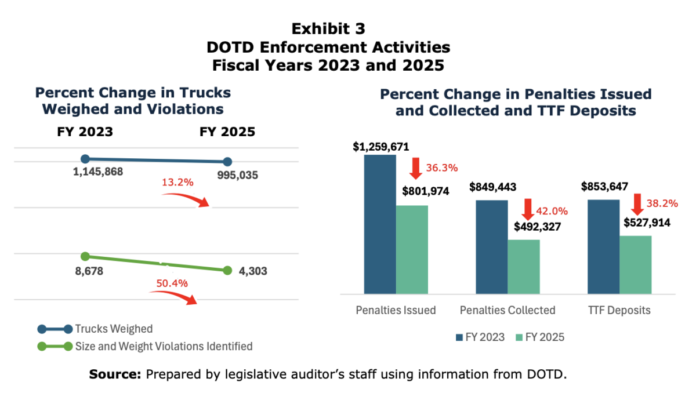
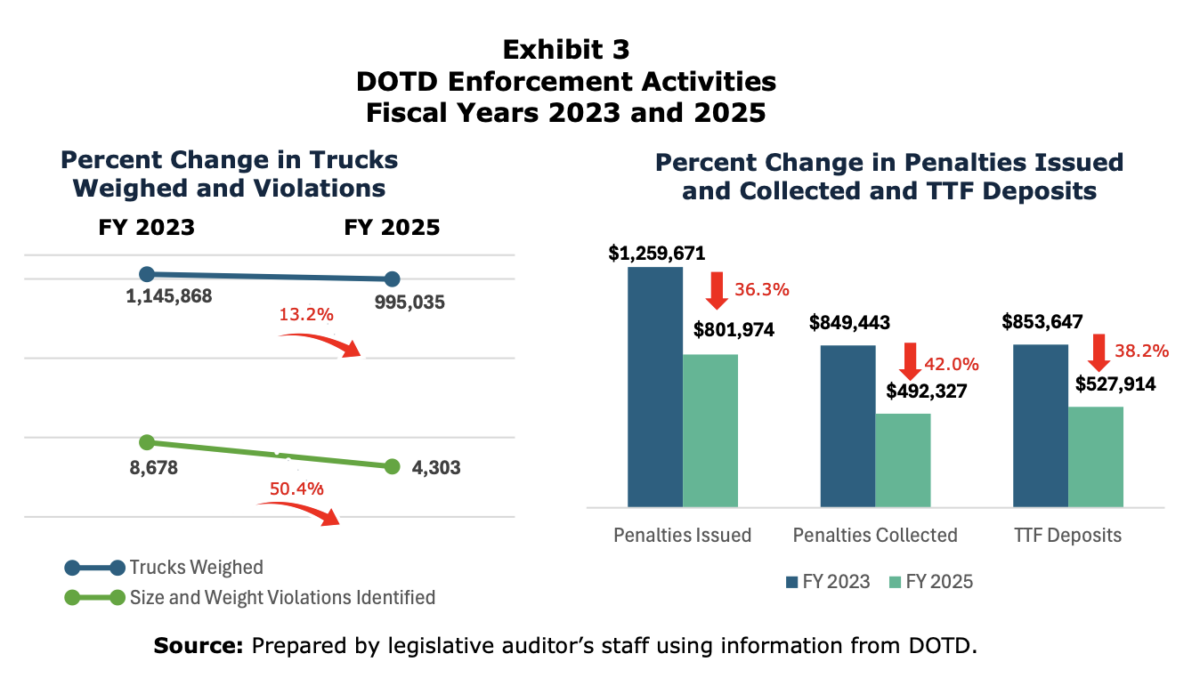
Specifically, the report revealed that “the DOTD’s fixed-point weight and compliance enforcement program weighed fewer trucks, detected fewer violations, and issued and collected fewer fines between fiscal years 2023 and 2025, despite having increased its staff and budget.”
Circumvention and Closures of Weighing Stations
The auditors also accused the DOTD of failing to take action against the illegal circumvention of weighing stations.
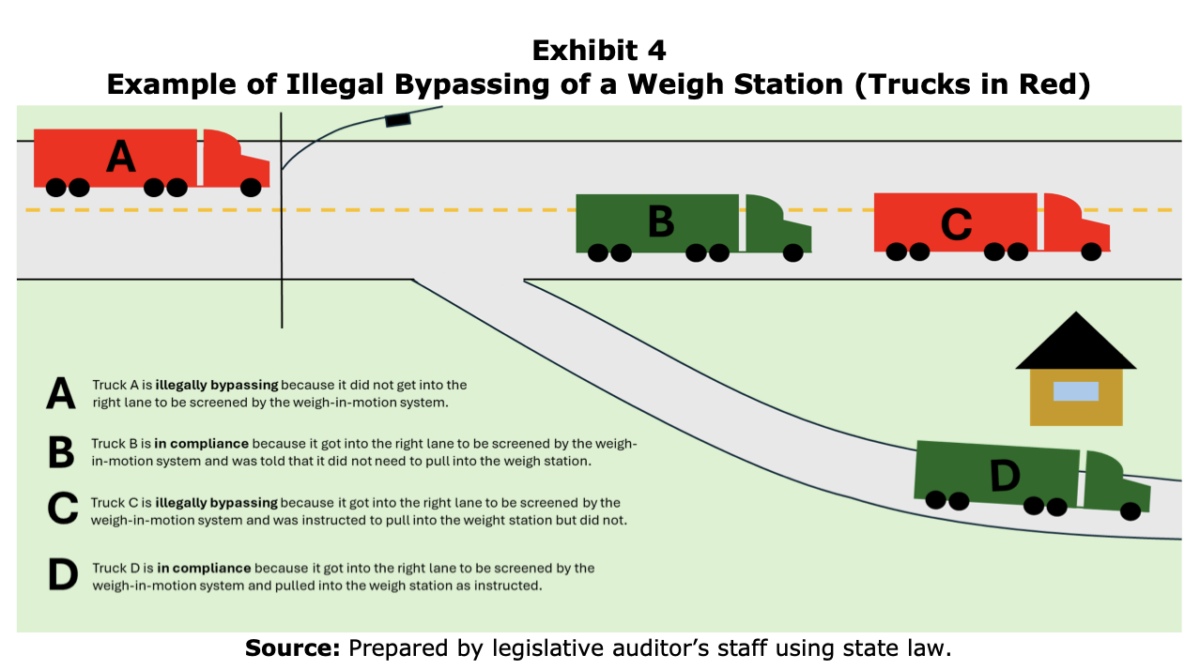
As part of the investigation, the auditors visited six weigh stations in Louisiana and found that 15.6% of the trucks (733 out of 4,703) were illegally bypassing them, resulting in a potential loss of “significant state revenue from fines that the DOTD could use to fund the maintenance of Louisiana’s roads.”
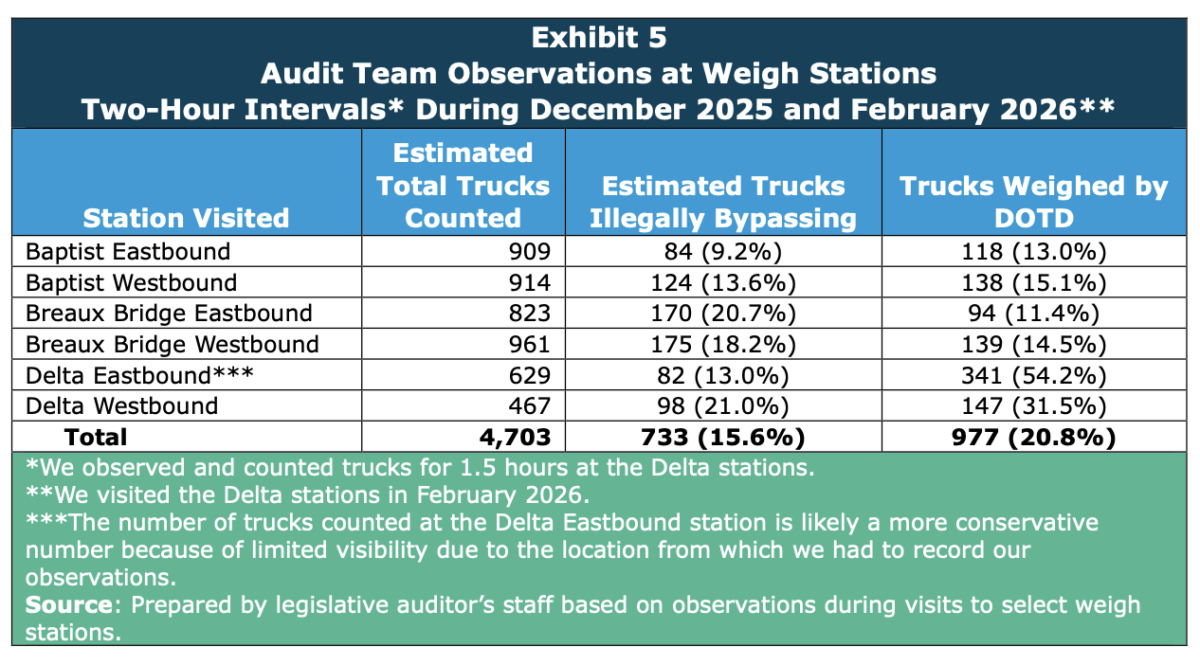
The DOTD reportedly ordered its police force to begin issuing citations for illegally bypassing weigh stations in May 2026. However, “the DOTD has safety concerns regarding stopping trucks that illegally bypass weigh stations, as it does not have access to criminal records. Without this access, the DOTD stated that it is unsafe for its officers to stop trucks and issue citations for illegally bypassing weigh stations or to conduct mobile inspections on state highways.”
The auditors also noted that there have been frequent closures of weigh stations since the LSP transferred operational authority over the facilities to the DOTD in 2023. According to the report, “the DOTD aims to keep interstate weigh stations open 18 hours a day, six days a week, provided sufficient staff is available. However, in October 2025, the 10 operational DOTD weigh stations were open approximately nine hours a day.”
Limited Ability to Collect Fines for Overweight Violations
The auditors also noted the limited ability of the DOTD and the LSP to collect fines from out-of-state carriers under current state law.
“As of October 2025, the DOTD had assessed, but not collected, $1.06 million, and the LSP had assessed, but not collected, $941,934 in penalties for size and weight violations during fiscal years 2023 through 2025. Neither the LSP nor the DOTD comprehensively tracks whether unpaid fines are owed by in-state or out-of-state carriers,” the report states.
The report notes that neighboring states impose misdemeanor penalties and even jail time on repeat offenders for size and weight violations.
Other issues revealed by the audit include confusion over the jurisdictional authority of the LSP and the DOTD regarding truck weight enforcement, the lack of use of “virtual weigh station” technology, and the “fragmentation” of the DOTD’s enforcement data.
Agencies Respond to Auditors’ Recommendations
Both the DOTD and the LSP have responded to the auditors’ recommendations to improve compliance with truck weight regulations.
The DOTD states that it plans to update weight enforcement policies and procedures by September 1, 2026, and begin using mobile scales starting October 1, 2026.
The LSP noted that “it is worth highlighting that several of the deficiencies identified in the audit report did not exist prior to the 2022 transfer of the LSP’s fixed weigh station operations to the DOTD,” but stated that officers remain committed to collaborating with the DOTD “to improve the enforcement of commercial vehicle regulations whenever operationally feasible.”
The LSP has also expressed its support for working with lawmakers to draft new legislation that would grant the agency greater authority “to establish stricter enforcement and collection mechanisms in cases of repeated or serious size- and weight-related violations committed by out-of-state carriers, while ensuring due process and promoting consistent compliance.”